

Quick answer
The los angeles whale watching season splits into two windows: gray whales migrate past the harbor from mid-December through April, with peak southbound sightings in January and northbound activity peaking in March. Blue whales and other baleen species visit from May through November, with July through September offering the most consistent encounters. Tours operate year-round from San Pedro and Long Beach, with morning departures between 8:00 and 10:00 providing calmer seas and better visibility.
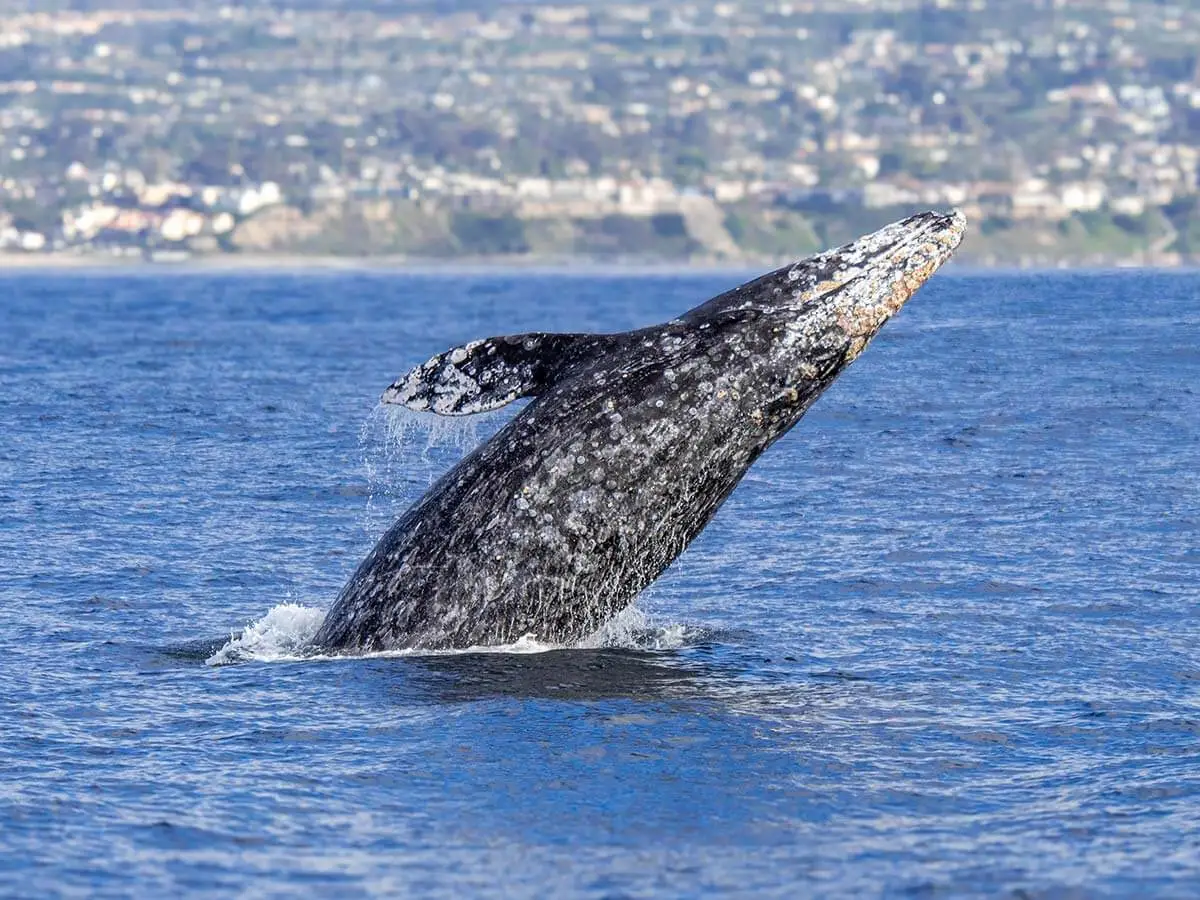
More than 20,000 gray whales travel the Pacific flyway each winter, and nearly all pass within a few miles of the Los Angeles Harbor breakwater. The southbound leg begins in mid-December as pregnant females leave Arctic feeding grounds for Baja California lagoons, where they give birth in sheltered bays. By late February the migration reverses: mothers and calves hug the coastline on their return north, often passing close enough to shore that patient observers spot flukes and blows from land. Summer brings a different spectacle. Blue whales—the largest animals ever to exist—follow krill blooms into the Santa Barbara Channel and San Pedro Basin, often lingering within 15 miles of the harbor. Humpback whales, fin whales, and occasional minke whales join them, drawn by the same upwelling currents that concentrate prey. The los angeles whale watching season for blue whales peaks between July and September, when sighting rates on commercial tours regularly exceed 90 percent. Operators based at Los Angeles Harbor in San Pedro and neighboring Long Beach run daily departures throughout the calendar, adjusting routes to match real-time migration patterns and recent sighting reports. Winter itineraries track gray whale corridors along the Palos Verdes Peninsula, while summer routes push farther offshore into deeper water where rorquals feed. Most voyages last three to four hours, departing between 8:00 and 18:00, though early slots benefit from calmer wind and flatter swells. The overlapping migration windows mean that Southern California whale watching rarely goes quiet. Even the transitional shoulder months of May and November often yield sightings, as late-departing gray whales share the water with early-arriving blue whales. This continuity, combined with the harbor's sheltered launch facilities and proximity to deep offshore habitat, sustains a year-round ecotourism infrastructure unmatched on the U.S. West Coast.
“More than 20,000 gray whales travel the Pacific flyway each winter, and nearly all pass within a few miles of the Los Angeles Harbor breakwater.”
Operating Hours for Los Angeles Whale Watching Season Tours
Tour operators in the Los Angeles harbor area maintain consistent weekly operating hours for whale watching departures. These hours apply to providers based in San Pedro and Long Beach.
| Monday | 08:00–18:00 | |
|---|---|---|
| Tuesday | 08:00–18:00 | |
| Wednesday | 08:00–18:00 | |
| Thursday | 08:00–18:00 | |
| Friday | 08:00–18:00 | |
| Saturday | 08:00–18:00 | |
| Sunday | 08:00–18:00 |
Getting to the Los Angeles Whale Watching Season Departure Points
Whale watching departures are located at Los Angeles Harbor in San Pedro and Long Beach. The most direct approach is via the I-110 or I-710 freeways depending on your specific departure terminal.
I-110 South to Harbor Blvd in San Pedro
I-710 South to Long Beach
J Line to Pacific Ave/6th St Station
Direct service to San Pedro/Long Beach Harbor
Pre-Visit Checklist for Los Angeles Whale Watching Season
Preparation ensures comfort and maximizes your chances of spotting marine life during Los Angeles whale watching season.
-
Book your tour in advance — Peak migration months (December–April) fill quickly, especially weekends.
-
Bring layered clothing and a windbreaker — Ocean conditions are unpredictable; morning departures can be 10–15°F cooler than shore temperatures.
-
Pack motion sickness medication if prone — Swells average 3–5 feet; take medication 30–60 minutes before departure for effectiveness.
-
Carry binoculars and a camera with zoom — Whales surface 50–200 yards from the vessel; optical zoom captures detail without disturbing animals.
-
Wear non-slip, closed-toe shoes — Boat decks become slick from spray; sandals and heels are prohibited on most operators.
-
Arrive 30 minutes before departure — Check-in, safety briefings, and boarding close 15 minutes prior; late arrivals forfeit their slot.
Check availability
Frequently Asked Questions About Los Angeles Whale Watching Season
Everything you need to know about los angeles whale watching season